sábado, 23 de agosto de 2014

3 grade song where is the spring

Hi boys and girls,

Here is the full song in Lesson 1 where is the spring(春天在哪里 Chūntiān zài nǎlǐ) and lyrics:

https://www.youtube.com/watch?v=-Bq7Ul7yteY
http://resources.echineselearning.com/kids/kids-chinese-638.html


Let's practice it!

2 grade song two tigers

Hi boys and girls,
Here you will find the song two tigers(两只老虎Liǎng zhī lǎo hǔ

https://www.youtube.com/watch?v=avqkb0UPC-U


The lyrics as follows:


两只老虎 两只老虎
跑得快 跑得快
一只没有耳朵 一只没有尾巴
真奇怪 真奇怪

Liǎng zhī lǎo hǔ,   liǎng zhī lǎo hǔ,
Pǎo de kuài ,    Pǎo de kuài
yī zhī  méi yǒu  ěr duō,
Yī zhī  méiyǒu   wěi bā, 
Zhēn  qí guài, zhēn  qí guài。

Two tigers, two tigers,
Running fast, running fast
One without ears, one without a tail

How strange! How strange!

Here is the model of mask we will use for September 1st.


Let's do it!

viernes, 8 de agosto de 2014

Review for Mid-Term Exam 8C-D - 10TH

Hello guys!
Here you will find the topics for mid-term exam!
Also I add a workshop, please solve it on your notebook and bring it to your mister / miss on next class


Subjects of study.  科目

1. Write the pinyin and meaning of the following words.

a. 美术
b. 化学
c. 音乐
d. 数学
e. 物理
f.  生物
g. 地理
h. 汉语
i. 英语
j. 法语
k. 体育
l.  历史
m. 汉字

2. Write ten sentences in mandarin about your opinion of different subjects, then translate them into English.  Use the expressions given.

我觉得   I think that
容易       easy
难学       dificult to learn
难写       difficult to write
有意思   interesting
有用       useful
因为       because
但是       but
所以       so
对我好   nice to me
我对----感兴趣    I am interested in----
我喜欢   I like
很           very
课           class
上           take

Example:    我     喜欢    上   数学  课  , 因为 老师 对 我 很 好。
                  I  like to take mathematics class, because the teacher is very nice to me.

我 觉得  物理  很 难学 ,  但是   有用 。
I think that learning phyisics is difficult, yet  useful

Measure words for class.

There are two measure words for class:  门 mén   , and  节 jié
Measure words are words that go between the number and object.

Number + measure word + object

If I want to say I take 5 classes every day then the structure would be.

每天    我    上     五   节课
meitian wo  shang  wu    jieke

门 mén   , is used more for subjects of study.

今年   我     学   十   门      课 。
Jinnian  wo  xue  shi   men     ke
This year I study 10 subjects.


Translate into English:

今年   我   学   十三   门   课。

上午  我们   上  六节课  ,  下午   我们   再  上   四节课。

Remember, the exercises should be solved on the Notebook.
Please also write a comment on this article: http://gcrbmandarin.blogspot.com/2014/07/learn-chinese-is-good-even-for-your.html
The most comments you write, the most score you will get ;)


Mr.  Miguel

lunes, 21 de julio de 2014

Eleventh Grade: Daily Routines in Chinese

Hello guys!
Here we have two videos for learning vocabulary about Daily Routines in Mandarin.

https://www.youtube.com/watch?v=HB9XqVvW_YY
https://www.youtube.com/watch?v=ON_eB_P1IV8


Learn Chinese is good, even for your health!

Chinese 'takes more brainpower'
Mandarin speakers use both sides of their brain
Speaking Chinese may take more brainpower than speaking English, a study suggests.

Researchers in Britain have found that people who speak Mandarin Chinese use both sides of their brain to understand the language.
This compares to English-language speakers who only need to use one side of their brain.
The researchers said the findings could boost understanding of how the brain processes languages.
This, in turn, could one day help scientists to develop better ways of helping people to re-learn languages after a stroke or similar damage to the brain.
Brain scans
Dr Sophie Scott and colleagues at the Wellcome Trust carried out brain scans on a group of Mandarin and English speakers.
They found that the left temporal lobe, which is located by the left temple, becomes active when English speakers hear English.

People who speak different sorts of languages use their brains to decode speech in different ways
Dr Sophie Scott,
Wellcome Trust
The researchers believe that this area of the brain links speech sounds together to form individual words.
They expected similar findings when they carried out scans on Mandarin speakers.
However, they found that both their left and right temporal lobes become active when they hear Mandarin.
"People who speak different sorts of languages use their brains to decode speech in different ways," said Dr Scott.
"It overturned some long-held theories."
Mandarin is a notoriously difficult language to learn. Unlike English, speakers use intonation to distinguish between completely different meanings of particular words.
For instance, the word "ma" can mean mother, scold, horse or hemp depending on how it is said.
The researchers believe that this need to interpret intonation is why Mandarin speakers need to use both sides of their brain.
The right temporal lobe is normally associated with being able to process music or tones.
"We think that Mandarin speakers interpret intonation and melody in the right temporal lobe to give the correct meaning to the spoken words," said Dr Scott.
"It seems that the structure of the language you learn as a child affects how the structure of your brain develops to decode speech.
"Native English speakers, for example, find it extraordinarily difficult to learn Mandarin."
Learning languages
Dr Scott said the findings could help scientists to understand how the brain learns language.
It could be particularly useful in trying to understand how it re-learns language after a stroke.
She suggested it could also lead to new drugs to help people who have lost their language skills.
"There is evidence from other studies that certain drugs affect learning in the brain regions that support hearing and speech," she said.
"This is something we can improve on."
Dr William Marslen-Wilson, of the MRC Cognition and Brain Sciences Unit at Cambridge University, welcomed the study.
"It is an interesting finding," he told BBC News Online.
"Looking at languages that are very different from each other helps us to understand how the brain processes language.
"It can also help us to understand language rehabilitation," he said.
"This field is really opening up but it is very early days."
The findings will be included in the summer science exhibition at the Royal Society in London, which runs from 1 to 3 July. 

Article taken from BBC News 
http://news.bbc.co.uk/2/hi/health/3025796.stm 
 

lunes, 19 de mayo de 2014

YCT Flashcards

Hi!
In order to master the vocabulary for YCT level 1, here I give you a link for you to practice. It's free!

http://quizlet.com/8857070/yct-level-1-vocabulary-flash-cards/

^o^
Good luck in the exam!!

Written by:
Miguel Orjuela

Welcome to the Mandarin Blog!

大家好!
欢迎你们来我们的中文博客。
希望我们能互相帮助,提高我们的中文水平!

Hello everybody!
Welcome to our Chinese blog!
Hope we can share our knowledge in order to improve our Chinese level!

Here there is a very useful page about Chinese dictionaries online!

eastasiastudent.net/china/mandarin/best-chinese-dictionaries


If you want to have a dictionary on your tablet or mobile phone you just can download
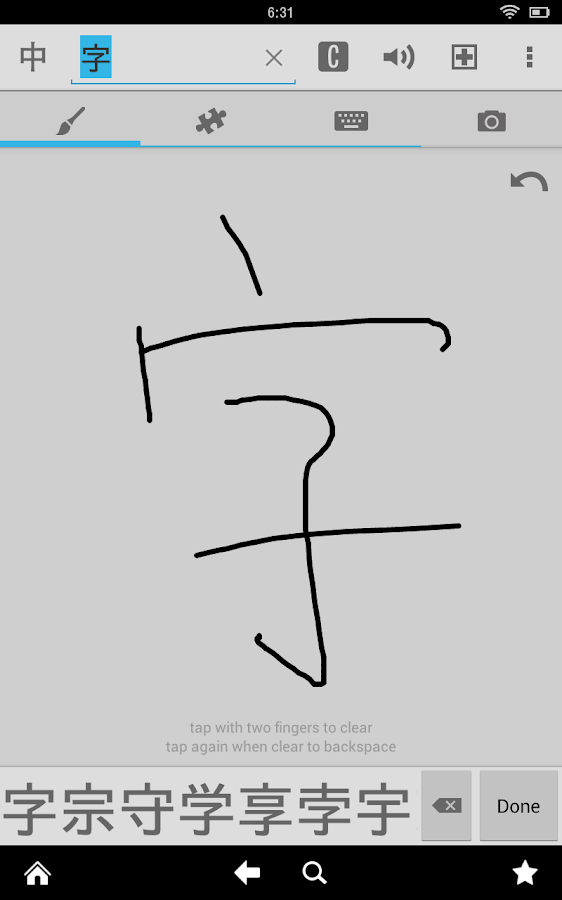
Pleco, it's a great dictionary, here it's the link

Android 
https://play.google.com/store/apps/details?id=com.pleco.chinesesystem

IOS
https://itunes.apple.com/us/app/pleco-chinese-dictionary/id341922306?mt=8


If you know more or have some suggestion please comment!


Written by:
Mr. Miguel Orjuela

FACEBOOK:

TWITTER:

YOUTUBE:

FLICKR:

INSTAGRAM:

WEBSITE: